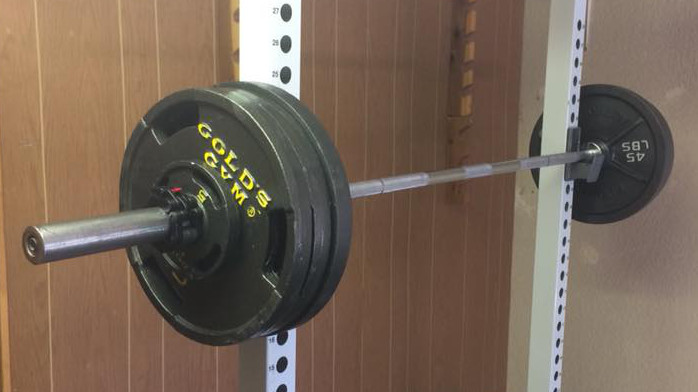
Here’s a video of Ben Pakulski doing heavy deadlifts in preparation for Mr. Olympia 2012. His last set is with 635 lb.
You can learn more about the way he trains by reading my review of Mass Intentions (MI40).
Here’s a video of Ben Pakulski doing heavy deadlifts in preparation for Mr. Olympia 2012. His last set is with 635 lb.
You can learn more about the way he trains by reading my review of Mass Intentions (MI40).
The weather is heating up as summer draws near. This means many of you will want to get your bodies ready for wearing swimsuits before heading to the beach, pool, or lake. There’s still time for you to make your transformation as long as you implement the correct program.
Just remember that diet and training is the way to go–don’t waste your time on pills or ab machines.
I can recommend some different programs based on your primary goals:
1. Fat Loss–the fast track.
John Romaniello’s Fat Loss Forever is probably going to be the fastest way to lose fat. His program incorporates intermittent fasting with some intense workouts. I can’t really think of a faster way for you to lose the winter pounds.
2. For Women
The only program I recommend specifically for women is Flavia Del Monte’s Full-Body-Licious. Her training methods tend to target the areas women want to work on (hips and thighs, for example). The diet is also solid.
3. For Mass
Let’s say you are a beginner wanting to put on 10 or more pounds before hitting the beach. I’d recommend Jason Ferruggia’s Muscle Gaining Secrets for new trainees. If you are more advanced and looking to break some muscle building plateaus I’d recommend Ben Pakulski’s Mass Intentions (MI 40).
4. Final Touches
Some of you are already pretty close to your ideal summer shape. Maybe you just need to drop a little of that “stubborn” fat or add a little extra lean mass (or both). I’d highly recommend the Renegade Diet (also by Jason Ferruggia) if this is your situation.
Below is a video demonstration of the suitcase deadlift. 
I think the first time I ever really noticed this movement was when I reviewed the Savage Strength Training System. This movement can be done with a kettlebell, barbell, or even a dumbbell.
I did this exercise for the first time last night. I really like the way it hits the oblique/core muscles–something I want to work on. As mentioned in the video, suitcase deadlifts can also help you improve your grip strength. This also hit my shoulders, traps and upper back. I plan to incorporate this lift as a regular part of my training.
Another thing I like about it is the ability to train muscles effectively with less weight than I would use with the standard/sumo deadlift.
We’ve all heard breakfast being called the “most important meal of the day.” You may have also heard advice like this
regarding weight loss: “Eat like a king for breakfast, a prince for lunch and a pauper for dinner.”
Here are a couple of theories I’ve heard about the role of breakfast in fat loss and fitness:
*Your body is “starving” after going at least eight hours without eating (while you were asleep).
*You are more likely to burn the calories you eat in the morning since you have a full day’s activities ahead of you.
I no longer believe either of these, especially the first one. After studying intermittent fasting I now understand that the human body is not “starving” when you wake. Postponing your first meal, in fact will probably result in more fat being used for fuel (vs. carbohydrates).
I’ve also learn that eating most of your carbs at night can be effective for weight loss as long as you maintain an overall negative calorie balance.
But eating breakfast may be helpful in one way: it may help you comply with a low calorie diet. One study, for example, surveyed subjects in the National Weight Control Registry who had successfully maintained a significant weight loss. Most of these subjects (78%) reported eating breakfast every day.1
But I haven’t seen any research that demonstrates a metabolic advantage to eating breakfast. It seems the only benefit to eating breakfast is the way it may affect your eating habits for the rest of the day (behavioral advantage). Many who skip breakfast tend to overcompensate later in the day with high calorie food choices.
Once again we see fat loss comes down to maintaining and overall negative calorie balance (using more calories than you consume) for an extended period of time–compliance. The time of the day you eat these calories doesn’t seem to matter.
I personally like skipping breakfast and eating my calories later in the day (like the Renegade Diet prescribes). You have to experiment and see what works for you for the long term. You may want to check out Visual Impact Cardio if you want a more detailed plan for cardio and several options for how to plan your diet.
Reference:
1. Obes Res. 2002 Feb;10(2):78-82. Long-term weight loss and breakfast in subjects in the National Weight Control Registry.
he internet is flooded with hoodia products and ads. Researching this isn’t easy because a google search of “hoodia” produces a bunch of websites trying to sell the stuff.
Here’s the truth about Hoodia Gordoni:
Hoodia Gordoni is a very rare cactus-like plant found in the Kalahari Desert of South Africa. Tribal people have used
it for centuries as an appetite suppressant. Researchers have isolated hoodia’s appetite suppressing ingredient—a substance called “P57.”
Sounds great so far, right? Not so fast—here are the problems:
*The hoodia plant is rare, fragile, and protected by conservation laws. You can’t collect it or grow it without a special permit.
*The before-mentioned tribal people used the hoodia flower itself. There’s no reason to believe the same appetite suppression can come from “hoodia extract” powder, especially when you consider the next fact.
*Pharmaceutical companies (most recently Unilever and Phytopharm) have spent millions trying to effectively extract P57. None have succeeded. Here’s a quote from Unilever (November 2008):
“Data suggests using the extract would not meet our safety and efficacy standards,” said Unilever global media relations director, Trevor Gorin. “We have entered talks with Phytopharm to end the partnership.”
-Quote from AP-Food Technology’s Website
If millions have been spent without success, what makes you think these fly-by-night supplement companies have managed to find an effective product?
*Phytopharm/Unilever only conducted one study of Hoodia. It was too short (15 days) and too small to (nine subjects were studied) to give us any meaningful information.
*Because these supplements are not regulated it is difficult to know exactly what you are getting when you buy one of these supplements.
Conclusion:
I believe hoodia diet pills/supplements are a complete waste of money. Even if you find a pill with genuine extract, there’s no reason to believe it would be effective. One more thing: NEVER give your credit card information for one of those “free money-back trials.”
I’d highly recommend you look into a good diet/exercise program if you are really serious about losing fat.
Are there natural or over-the-counter alternatives to boost sexual potency? 
Let me first say this: I’m not a doctor. Sexual problems in men can be symptoms of even more serious medical conditions (like cardiovascular disease), so I would advise you to consult with your physician and make sure your general health is good.
You may want to get your testosterone levels checked as part of your check-up. I’d encourage you to first maximize your natural testosterone production–especially if you are running low on the manly hormone. Here are the three basic steps to increase your testosterone (as you’ll see, these are also good for health in general):
1. Sleep–lack of it negatively affects testosterone production (I’ve addressed this in my sleep for muscle article).
2. Sex–numerous studies have indicated sexual activity itself helps boost T levels.
3. Exercise/Diet–a good exercise program (including resistance training) will also help optimize your natural hormone production. Dietary changes are also beneficial (broccoli, for example, is great for hormone balance, and cutting back on beer may help).
These steps may not be enough in some cases, and testosterone replacement therapy should be considered.
Now let’s get to what I consider the most promising supplement:
Pycnogenol/L-Arginine Combination
I would recommend a combination of Pycnogenol and L-Arginine for those looking to boost sexual performance/potency through supplements. These two ingredients seem to work in a synergistic way to boost the body’s nitric oxide production, which plays an important role in erections. One research paper found this combination was able to restore/improve sexual function in 75-80% of men who used it.1 A double-blind, placebo-controlled study also found this supplement to be effective for mild to moderate erectile dysfunction.2
All you’d have to do is combine 50-150 mg of Pycnogenol with about 1.5 grams of L-Arginine. (you could go with L-Arginine in powder form if you prefer).
References:
1. This formula is in a product called Prelox. You can check out the Prelox study for more information.
2. BJU Int. 2010 Oct;106(7):1030-3. doi: 10.1111/j.1464-410X.2010.09213.x. Epub 2010 Feb 22. Investigation of a complex plant extract for mild to moderate erectile dysfunction in a randomized, double-blind, placebo-controlled, parallel-arm study.
A while back I found a study regarding the possible benefit of whey protein supplementation for weight loss:
Ninety overweight or obese subjects were divided into three groups. Subjects were given either whey protein, soy protein or a carbohydrate drink to consume twice a day (this was a double-blind study, meaning neither the subjects nor the ones measuring the results knew who was receiving what kind of supplement). Subjects were not given any instruction on changing their diets other than to drink the supplement 2x a day.
Measurements were taken every 10 days, with the final measurement being taken after 23 weeks. Those taking whey ended up with 1.8 kg lower body weight and 2.3 kg lower fat mass than the group who took the carbohydrate drink. Waist circumference was also smaller in the group who drank whey.
The study also found those who drank whey had lower levels of fasting ghrelin (a hormone associated with creating hunger).1
My Thoughts:
We shouldn’t read too much into one study, and we shouldn’t see whey protein as some kind of “magic bullet” for weight loss. Losing fat, after all, ultimately comes down to a negative calorie balance.
Having said this, it seems there may be an advantage to using whey supplements if weight loss is your goal. You’d need incorporate it into a good diet and exercise program.
You can click the image below to check prices on whey protein (at bodybuilding.com).
Reference:
1. Journal of Nutrition: Whey Protein but Not Soy Protein Supplementation Alters Body Weight and Composition in Free-Living Overweight and Obese Adults
Rusty Moore has released a new fat loss program called Visual Impact Cardio. I’ve had a chance to look over it, so
here’s my review:
The e-book introduction starts out with a simple premise: fat loss is a skill you can develop and master, just like anything else (a sport, for example). Most programs cover the basics (calorie deficits, etc.), but Rusty hopes this books will offer readers more in-depth information so they can become “masters” of fat loss. Here are just a few things he covers:
*Why short workouts can only do so much in terms of fat loss.
*Why you should primarily focus on calories burned during the workout (vs. post-workout “afterburn”).
*How interval training really works.
*How to set up your diet.
*Stubborn fat and why diet alone won’t get rid of it.
*Why he recommends separating weight training and fat loss workouts.
*A beginner, intermediate, and advanced cycle of routines, followed by a maintenance routine.
I found Visual Impact Cardio to be very well written. You’ll get the details on how fat loss works and how to properly integrate cardio work in order to maximize its effectiveness.
I also appreciate three different levels of training presented—this will allow you to start at the beginner level if needed (or start with more advanced cycles if you are in better shape).
I’ve kind of emphasized the exercise aspect of this e-book, but there’s also a lot of good information on diet. The author examines four different strategies for planning your meals and training in a way that maximizes fat loss. You should find one that works for you, regardless of what time of the day you prefer to train.
One last thing: this program also comes with printable training sheets. You could take these with you to the gym and record your workout.
I think you’d find Visual Impact Cardio to be a very helpful, practical guide to fat loss. I recommend it without hesitation. Just click here if you want to check it out. Please use my links if this review has helped you.
Alternate Programs:
Another popular product here on my blog is Jason Ferruggia’s Renegade Diet. This is a very effective approach to losing fat and maintaining/gaining lean muscle.
Green tea extract is often marketed as a weight loss or “fat burning” supplement. Is it worthwhile? I get conflicting reports from the research I’ve run across.
One Taiwanese study showed no benefit to green tea extract:
AIMS: To examine the effect of green tea extract (GTE) on obese women and to explore the relationship between GTE and obesity-related hormone peptides. METHODS: A randomized, double-blind, placebo- controlled clinical trial was conducted from July 2006 to June 2007 in Taipei Hospital, Taiwan. Seventy-eight of 100 obese women aged between 16 and 60 years with BMI>27 kg/m(2) and who had not received any other weight control maneuvers within the last 3 months completed this study. . . . . . .
CONCLUSIONS: This study showed no statistical difference in % reduction in BW, BMI and WC between the GTE and placebo groups after 12 weeks of treatment. The intake of GTE (491 mg catechins containing 302 mg EGCG) for 12 weeks is considered safe as shown by the results.1
But a study from Birmingham, UK sounds more promising:
Background: Green tea consumption is reportedly associated with various health-promoting properties. For example, it has been shown to promote fat oxidation in humans at rest and to prevent obesity and improve insulin sensitivity in mice. Objective: We investigated the effects of acute ingestion of green tea extract (GTE) on glucose tolerance and fat oxidation during moderate-intensity exercise in humans. . . .
Conclusions: Acute GTE ingestion can increase fat oxidation during moderate-intensity exercise and can improve insulin sensitivity and glucose tolerance in healthy young men.2
Where does this leave us?
It seems green tea extract may help with fat oxidation and insulin sensitivity. It isn’t too expensive (if you buy the right brand), and it is a good source of antioxidants.
In other words, it may be worth a try if you are implementing a diet and exercise program. PrimaForce Lean Green looks like a pretty good deal (I’ve had good experiences with that brand), but you can shop around. Or you may just want to buy some green tea–drink it down the old fashioned way.
Reminder: Fat loss happens because you have created a calorie deficit–not because you choose to use a particular supplement. You’ll need to be following a good program in order to lose fat. You may want to consider intermittent fasting if you are looking for an effective dietary strategy.
References:
1. Clin Nutr. 2008 Jun;27(3):363-70. Epub 2008 May 12. Effect of green tea extract on obese women: a randomized, double-blind, placebo-controlled clinical trial.
2. American Journal of Clinical Nutrition, Vol. 87, No. 3, 778-784, March 2008 Green tea extract ingestion, fat oxidation, and glucose tolerance in healthy humans
One of the tips mentioned in the Renegade Diet is minimizing the consumption of beer (or avoiding it altogether).
Turns out this “manly” drink can have some very unmanly effects on your physique.
It doesn’t take a degree in nutrition to know beer isn’t good for you. It is a source of empty liquid calories–alcohol alone has 7 calories per gram.
The negative effects of alcohol don’t stop there. Alcohol is a diuretic and negatively affects hormones associated with building muscle and losing fat (cortisol, growth hormone, etc).
But beer has yet another ingredient: hops. Hops are very high in chemicals called phytoestrogens, which act like estrogen in the body. It seems even moderate, regular drinking with beverages containing these chemicals can produce “estrogenlike effects” in humans. Men who have abused alcohol to the point of liver disease often suffer from testicular failure and feminized physiques.1
I’m not saying a couple of beers every once in a while will ruin your physique. But I think you should keep this information in mind when setting up your overall nutrition plan.
Reference:
1. Alcohol Health Res World. 1998;22(3):220-7. Alcoholic beverages as a source of estrogens.