I was impressed (and a bit surprised) at what I learned in Brad Pilon’s How Much Protein book. I’ve saved a lot of money on supplements since reading it.
I thought I’d share some research I found while discussing/debating nutrition on a bodybuilding forum:
Although definitive dietary recommendations for various athletic groups must await future study, the weight of current evidence suggests that strength or speed athletes should consume about 1.2-1.7 g protein/kg body weight.d-1 (approximately 100-212% of current recommendations) and endurance athletes about 1.2-1.4 g/kg.d-1 (approximately 100-175% of current recommendations). These quantities of protein can be obtained from a diet which consists of 12-15% energy from protein, unless total energy intake is insufficient. There is no evidence that protein intakes in this range will cause any adverse effects. Future studies with large sample sizes, adequate controls, and performance as well as physiological/biochemical measures are necessary to fine tune these recommendations.1
This is fairly consistent with what I’ve learned from the before-mentioned protein book, and it is less than the “1 gram per lb of body weight” you’ll keep hearing in bodybuilding circles.
Let’s do a few calculations for those of us more familiar with pounds. Right now I weigh around 195 lb.–88 kilograms. Multiply that with the lower end of the suggested requirement (1.2 grams) and you end up with a protein requirement of 105 grams a day. This is consistent with Brad Pilon’s conclusions, and it’s about half of what the typical muscle magazine article would suggest.
I actually eat around 80-90 grams/day, and I’ve seen no negative effect on strength or 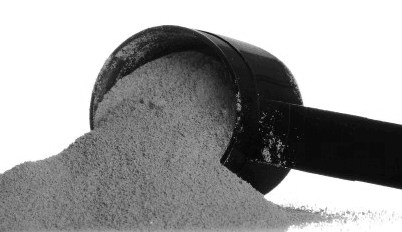 muscle mass.
I’m not saying eating a gram of protein per pound of body weight is bad for you. I’m simply challenging the notion that extremely high levels of this macronutrient are necessary to build (or maintain) muscle.
I’m also not saying you shouldn’t use protein supplements. I still use them for the sake of convenience, but I spend less money them now.
Reference:
1. J Sports Sci. 1991 Summer;9 Spec No:53-70. Effect of exercise on protein requirements.